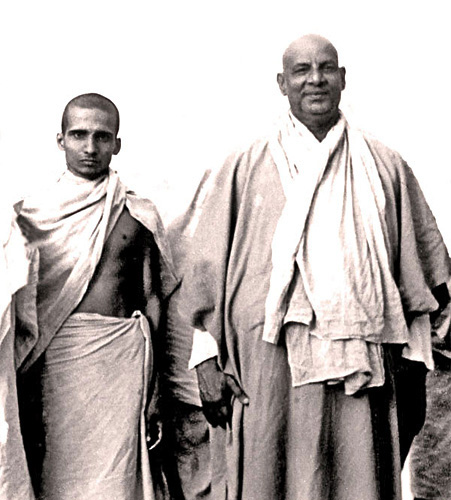
Swami Sivananda and swami Vishnudevananda are the inspiration behind the International Sivananda Yoga Vedanta Centres. The class for beginners are highly inspired by their philosophy and teachings. You can find more information on my first blog regarding the Sivananda center.
During the 4 first yoga classes, you will have time to practice and learn more about the following 12 basic Asanas and their variations.
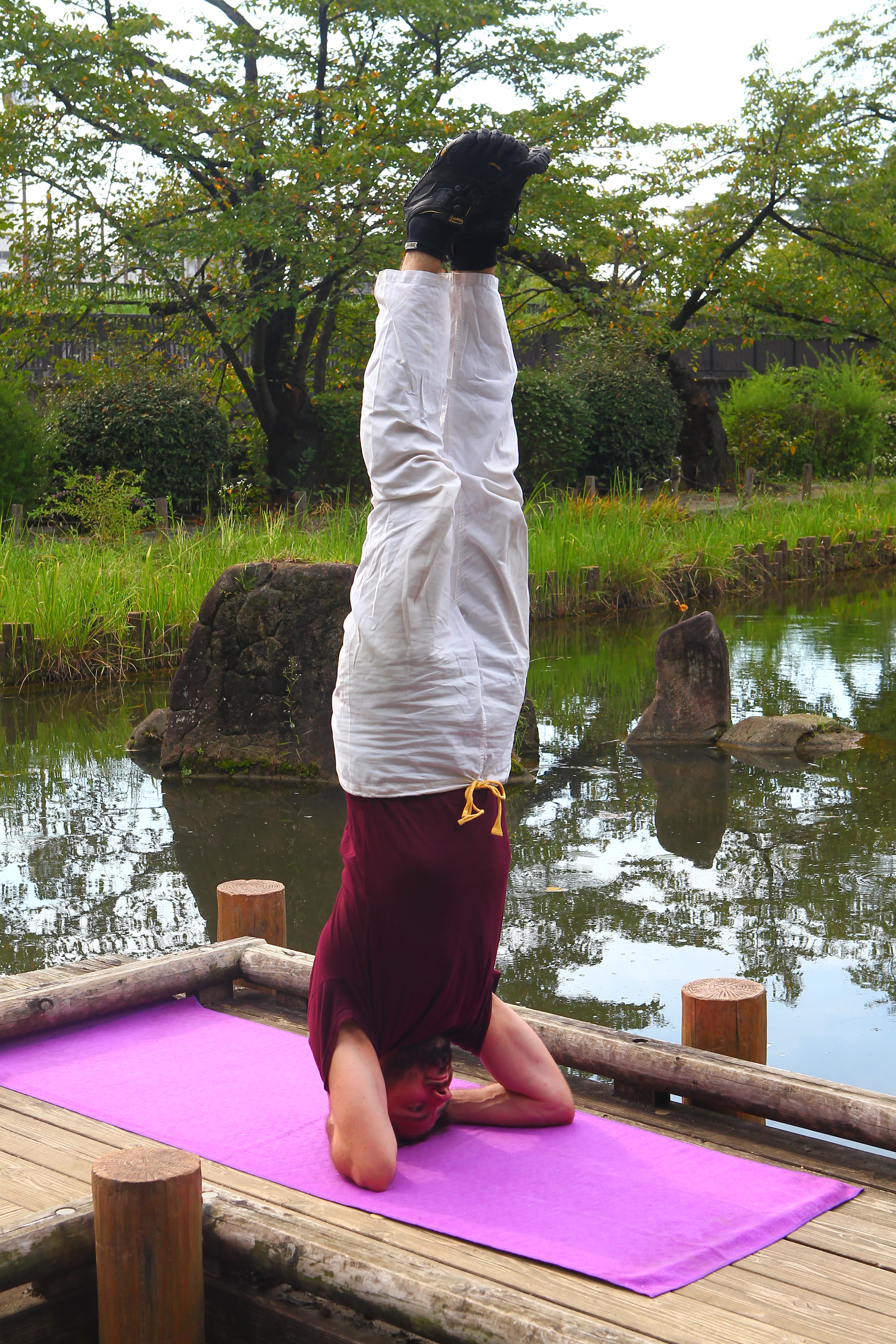
Sirshana – (headstand)
This Asanas is practiced with the help of the hand and arms. The whole weight of the head and trunk is placed on the interlocked hands and the elbows. Inverting the body enhances deep breathing, increase the oxygen supplies to the brain and sympathetic nervous system, etc.
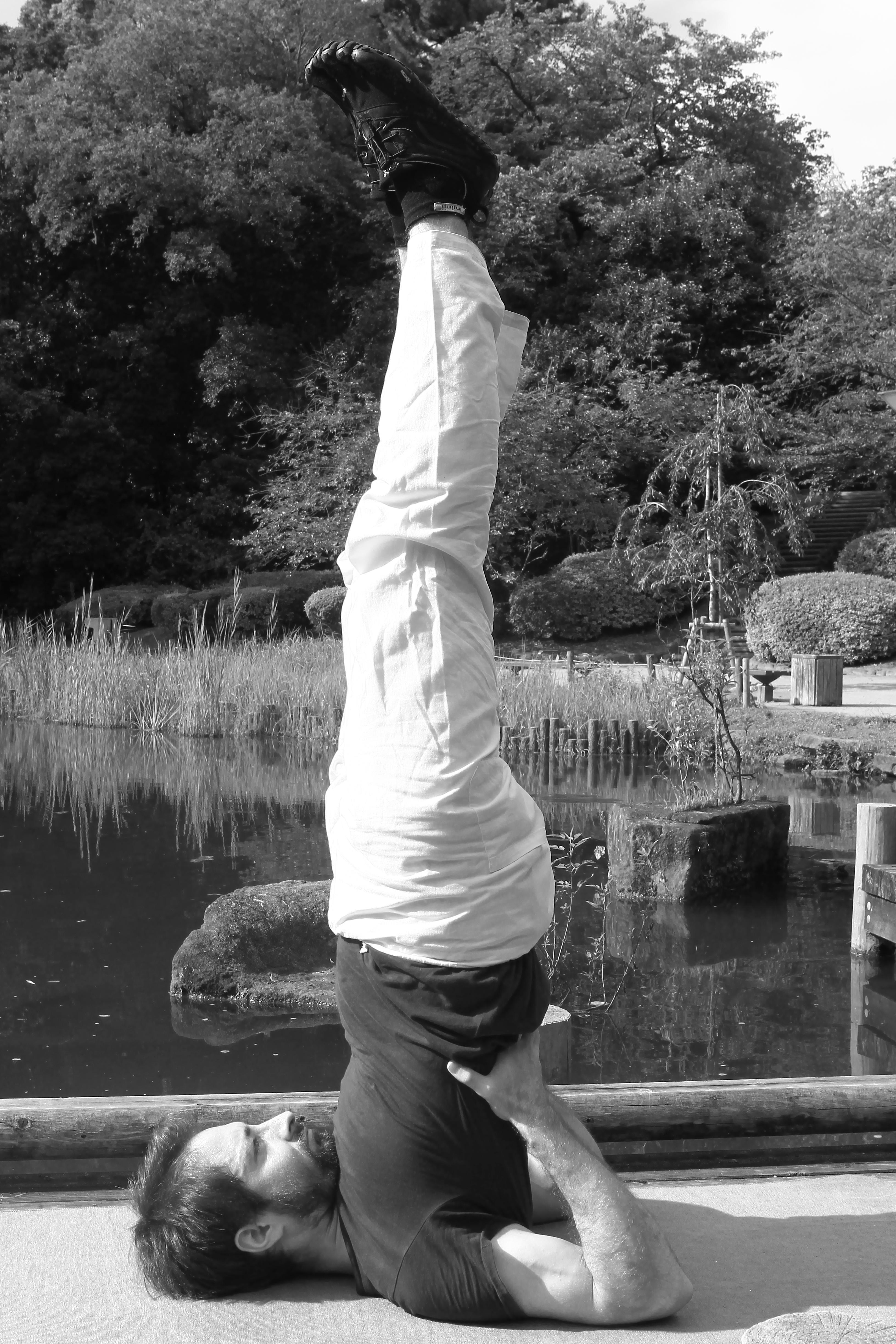
Sarvangasana – (Shoulderstand)
This exercise is similar to the headstand. In headstand, circulation and concentration are directed to the brain, but in shoulderstand the concentration and circulation are directed to the thyroid and parathyroid. The tyroid is the most important gland of the endoctrine system, and this exercice gives it a rich supply of blood. It brings a rich blood supply to the thyroid, it is massaged and its activity regulated.
 Halasana – (Plough pose)
Halasana is a key position for the cervical region. All regions of the spine are stretched, bringing increased flexibility to the neck and spine. Tension is released from the cervical region.
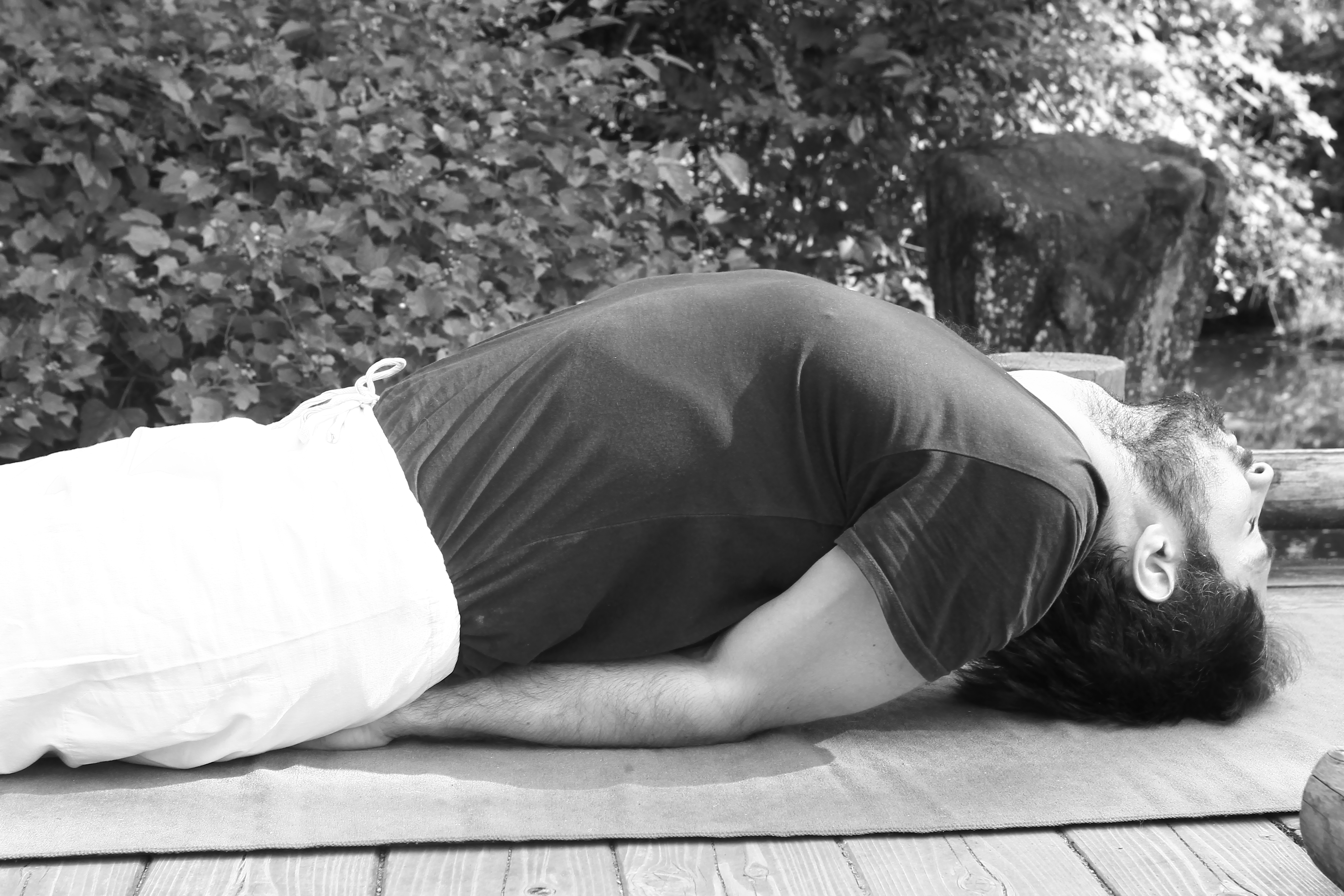
Matyasana – (Fish pose)
It is the counter position of the shoudlerstand. The fish removes stiffness from the cervical, thoracic and lumbar regions, bringing an increase of blood supply to these parts.
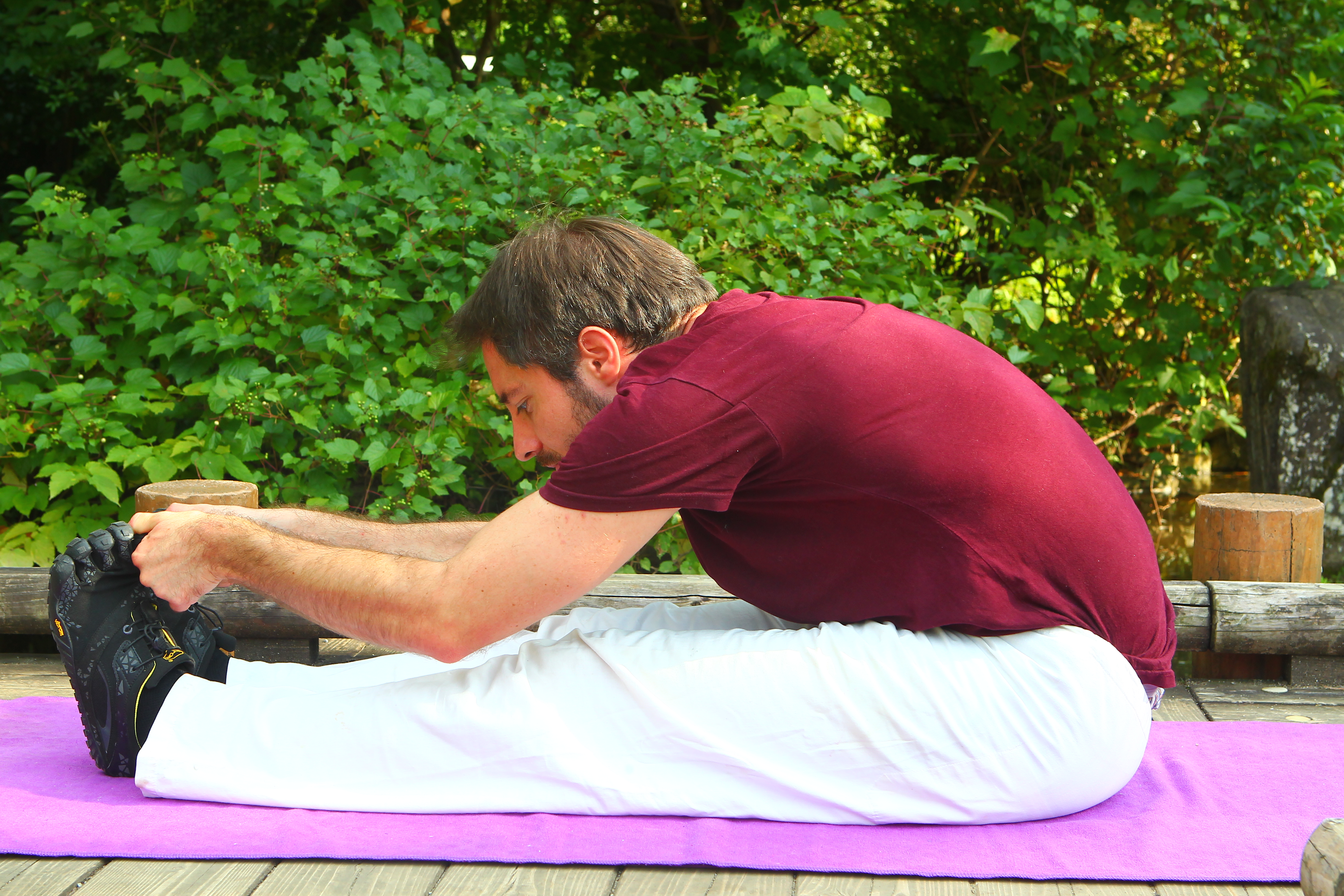 Paschimotasana – (Head-knee pose)
It is a powerful abdominal exercise. It stimulates such abdominal viscera as the kidneys, liver and pancreas. This position is valuable for diabetic patients. The hamstring muscles of the back of the knees are strengthened. The spine becomes elastic and thereby perennial youth is established. Thus, a massage is naturally given to the organs in the abdominal cavity.

Bhujangasana – (Cobra pose)
Thanks to this position, the deep and superficial muscles of the back are well toned. This pose relieves the pain of the back that may have been caused by overwork. The thoracic region is stretched and the rib cage expanded. The Cobra is therefore effective in combatting asthma and other respiratory problems.
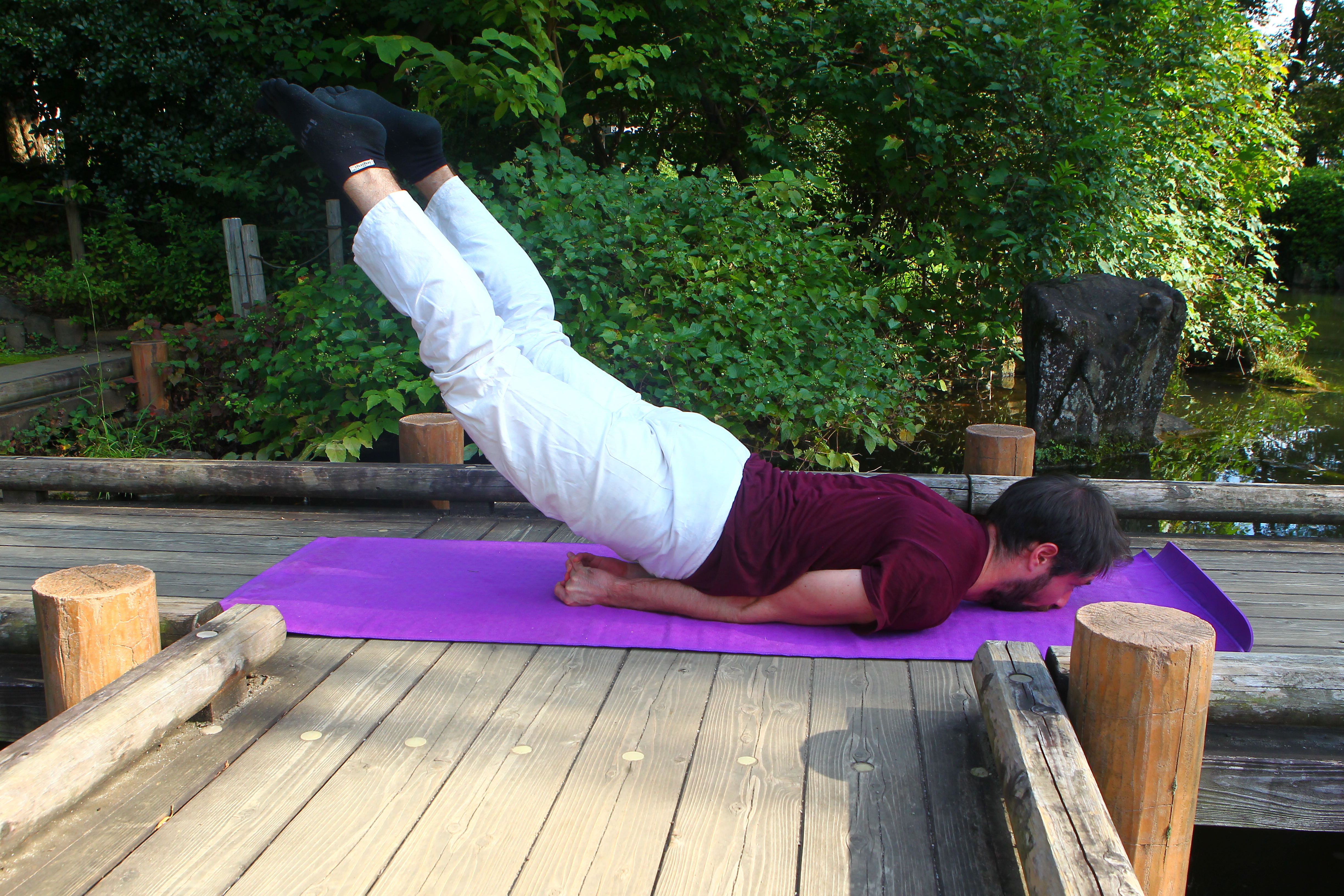
Salabhasana – (Locust pose)
The cervical region and ligaments are quite used in this pose, the sacrum and lumbar regions are also strengthen. Abdominal pressure is increased, intestinal functions are regulated through the pressure of this natural massage, especially pancreas, liver and kidneys.
 Dhanurasana – (bow pose)
When this asna is performed, it gives the appearence of a bow. You can the on the picture that the whole spine is bent like a bow. So this is the best exercise for cervical, thoracic, lumbar, or sacral region of the spine. Flexibility is brought to all regions listed above. Abdominal muscles are strengthened and the thoracic region expanded.
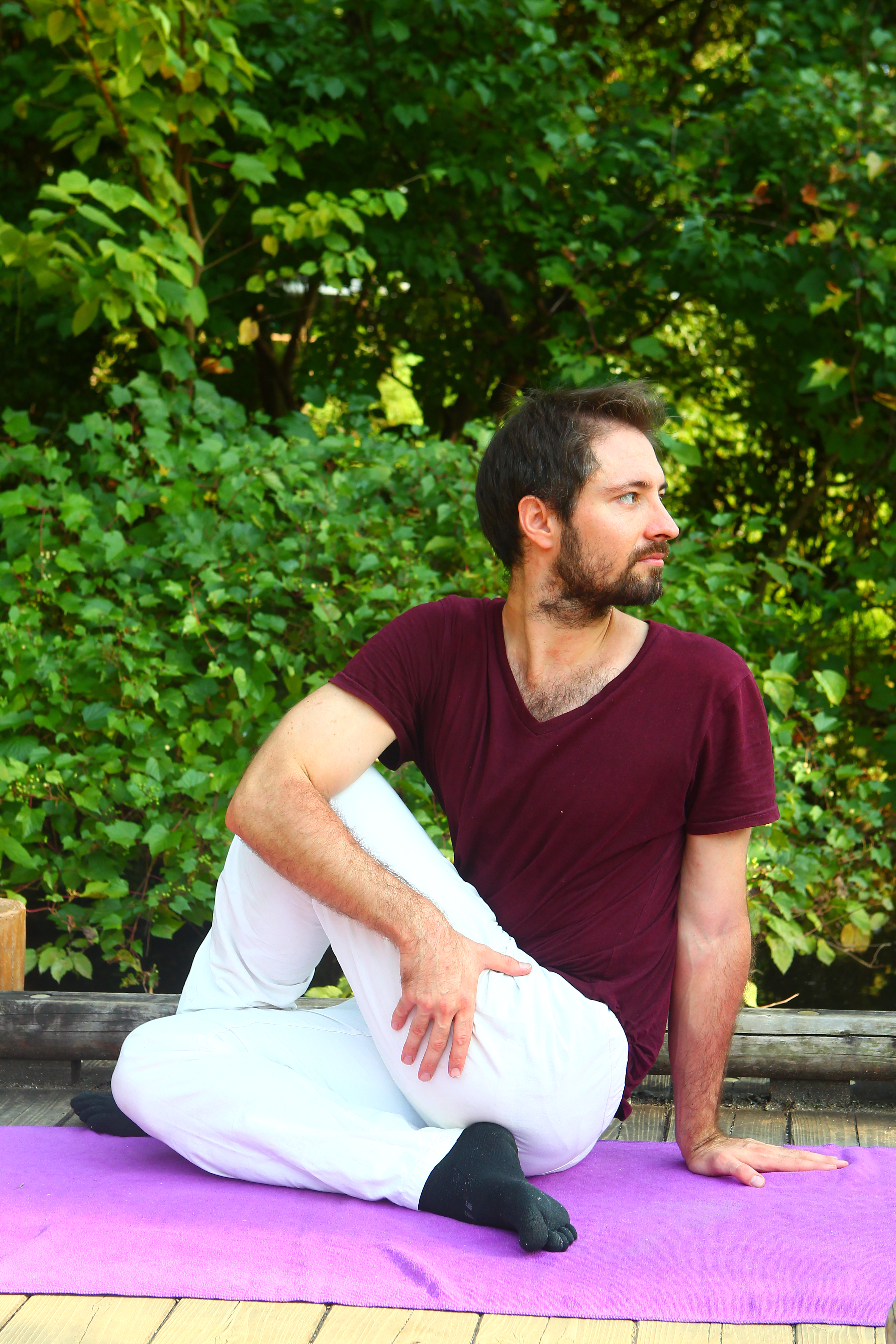 Ardha Matsendrasana – (half spinal twist)
This pose keeps the spine elastic and massages the abdominal organs well. The spinal nerves roots and the sympathetic system are toned. In this position every vertebra is rotated on both sides. This Asana helps to keep the spine elastic, circulation is speeded up, abdominal muscles are massaged, the large intestine in particular is stimulated.
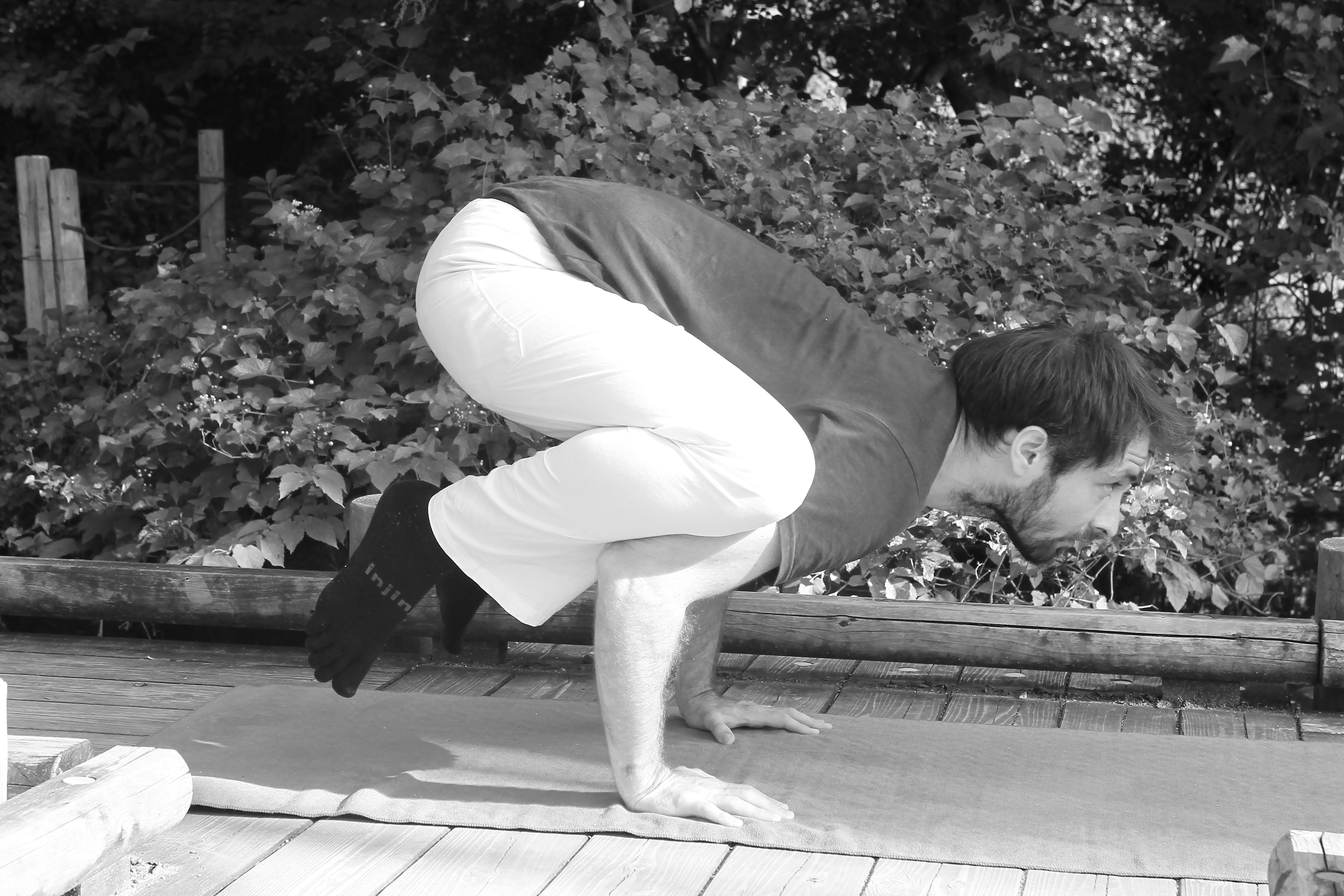 Kakasana – (Crow pose)
While practicing you will strengthen muscles and balance. Arms, wrists, shoulders and abs will be toned. It increases the breathing capacity by expanding the chest. The muscles of the fingers, wrists and forearms are stretched.
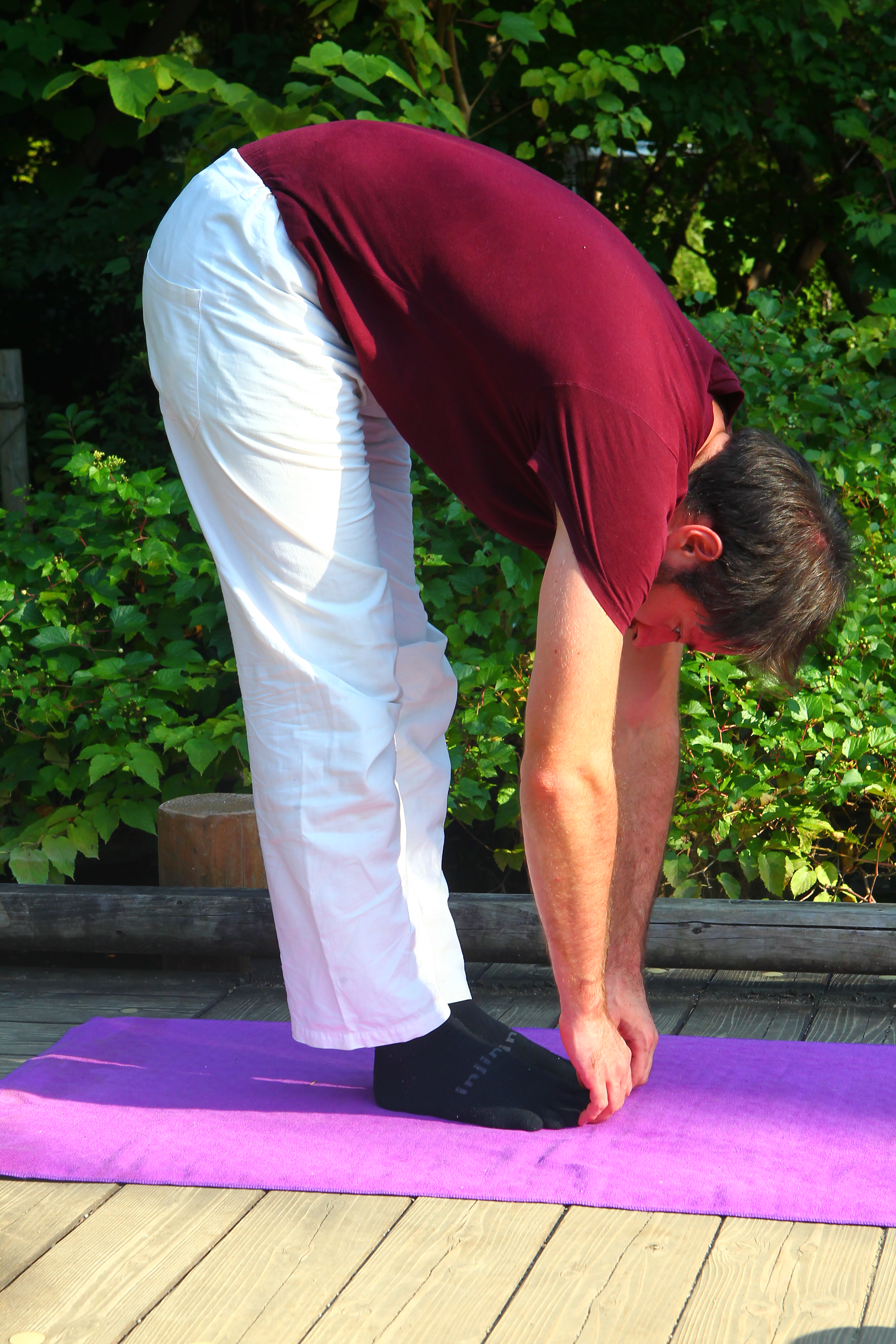 Pada Hasthasana – (Hands to feet pose)
The spine becomes supple and is lengthened. The joints are mobilized, the spine becomes elastic and invigorates the entire nervous system. A complete stretch is given to the posterior of the body and an increase of blood supply the brain.
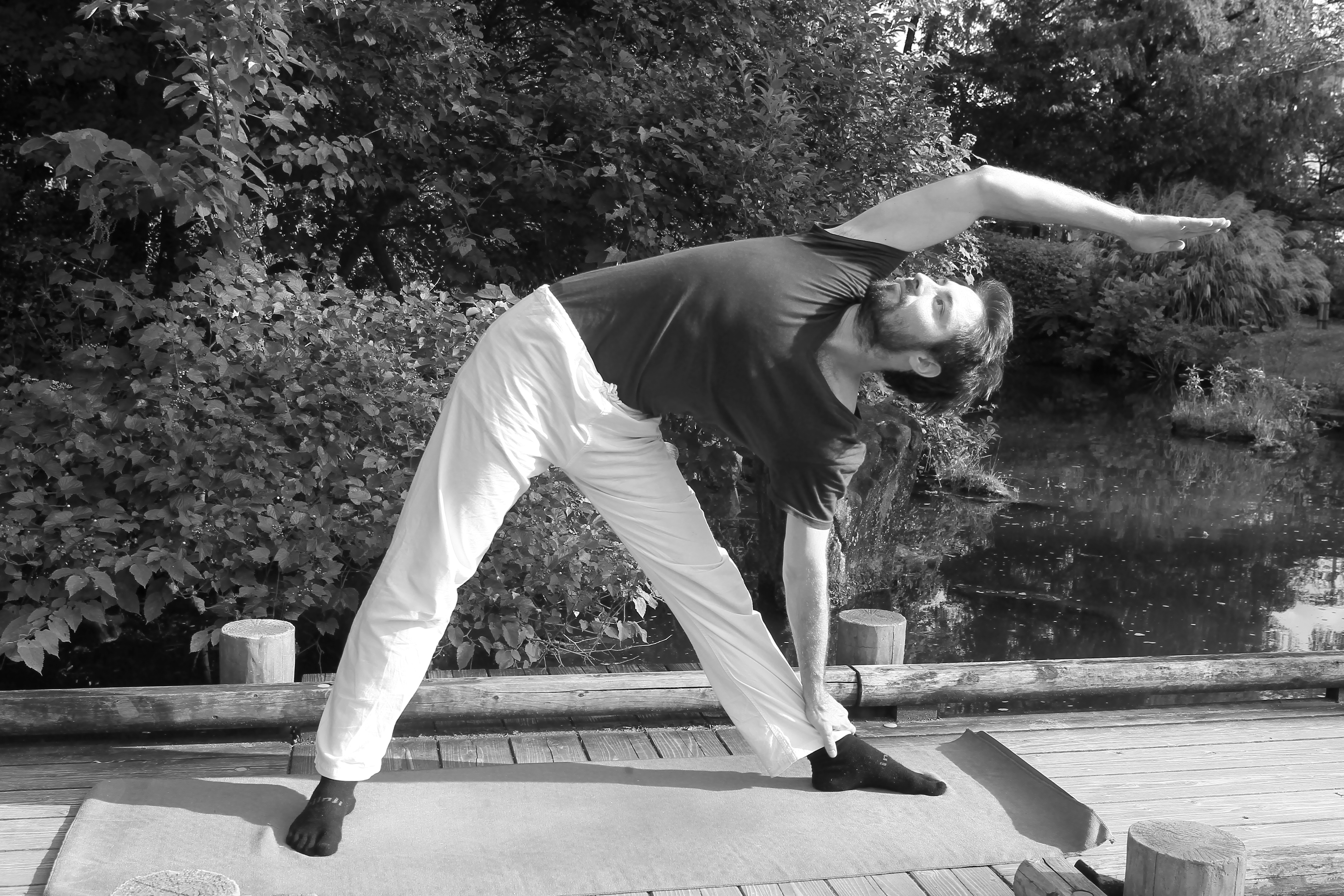 Trikonasana – (Triangle pose)
This pose tones the spinal nerves and the abdominal organs, increases peristalsis of the bowels and invigorates the appetite. The body becomes light. The trunk muscles are contracted, relaxed and stretched. It also promotes hip and leg flexibility.
If you want to learn more about the Yoga lesson, please click here.
If you want to learn more about the variations please, click here.
 tokyo-yoga.org
You must be logged in to post a comment.